Routine calibration has long been the standard practice for keeping gas sensors reliable. But in the time between calibrations, how do you know your sensors are still functioning properly?
Are they still accurate? Are they even able to detect gas at all?
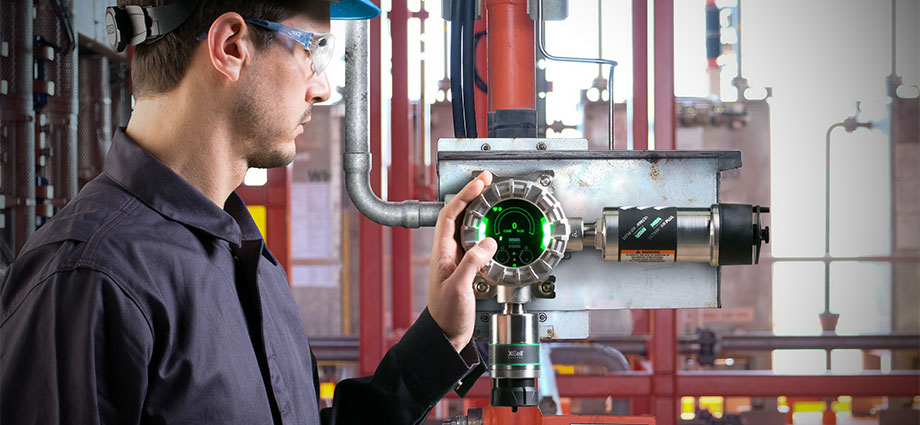
With MSA’s TruCal® technology, available on XCell® hydrogen sulfide (H₂S) and carbon monoxide (CO) gas sensors, you get a smarter, more proactive approach to gas detection. TruCal helps monitor sensor health automatically, so you don’t have to wait until the next scheduled calibration to find out something’s wrong.
Whether you’re running critical infrastructure or a high-demand industrial facility, TruCal helps give you added peace of mind—right where it counts: between calibrations.
What is TruCal?
TruCal is a patented sensing technology designed to validate and correct the performance of electrochemical H₂S and CO gas sensors, using Adaptive Environmental Compensation (AEC). Unlike traditional sensors that rely on periodic calibration or bump tests, TruCal performs automatic internal diagnostics every six hours—without the need for applied gas or technician interaction.
Here’s what TruCal does:
- Performs internal self-checks every six hours to verify that the sensor is accurate and functioning properly
- Compensates for sensitivity changes that could otherwise cause sensor drift or false readings
- Helps extend calibration intervals—up to 2 years, depending on use and environment
By automatically verifying sensor accuracy and sensitivity, TruCal helps improve reliability and reduce the burden on maintenance teams, particularly in large or remote facilities.

How TruCal® technology lowers cost of ownership with improved sensor performance and less maintenance.
DOWNLOAD WHITEPAPERKeep the Path Clear: Monitor for Inlet Blockages
While TruCal checks the internal integrity of the sensor with AEC, it can’t detect if something is physically preventing gas from reaching the sensor face—like mud, ice, or debris clogging the sensor inlet.
That’s where Diffusion Supervision comes in.
Diffusion Supervision is an optional feature available with TruCal-equipped sensors. It uses a proprietary acoustic mechanical design and algorithms to help ensure gas can reach the sensing element. It measures sound characteristics across the sensor’s gas inlet every six hours.

If the inlet becomes blocked—by ice, dirt, or debris—the system detects a change in the sound signature and triggers a fault condition. Once the obstruction clears, the system automatically recognizes the restored airflow and returns the sensor to normal operation.
This additional monitoring adds a critical layer of protection, helping identify blockages that might otherwise go unnoticed until a manual bump test or calibration is performed.
Why does that matter? Because a perfectly functional sensor that can’t “see” gas is still a risk. Blocked inlets can prevent gas from reaching the sensing element, which could delay critical alarms in hazardous environments.
Key benefits of Diffusion Supervision sensors:
- Alerts for blocked or restricted gas paths
- Helps detect issues earlier than standard maintenance cycles would
- Adds an additional safeguard for harsh, dirty, or remote environments
- Supports safer operations by verifying not just sensor functionality, but also accessibility to gas
Diffusion Supervision sensors help ensure your gas detection system isn’t just online—it’s actually able to detect the hazards it was installed to monitor.
Engineered for Industrial Demands
TruCal sensors are built for tough, mission-critical applications. Whether you’re monitoring sour gas in upstream oil and gas, managing confined spaces in wastewater treatment, or protecting workers in chemical processing, these technologies are designed to reduce uncertainty and support long-term performance.
Benefits across your operations include:
- Fewer unplanned maintenance trips
- Reduced risk of undetected drift or sensor failure
- Improved calibration scheduling and labor efficiency
- Greater uptime and performance confidence
These capabilities don’t eliminate the need for manual calibration, but they do add an intelligent, automated safety layer between service events.
Available on MSA’s High-Performance Fixed Gas Detectors
TruCal XCell H₂S and CO sensors are available on MSA’s most advanced fixed gas detection platforms:
- ULTIMA® X5000 – Dual-sensor design, touchscreen interface, and Bluetooth® capability for easy configuration
- General Monitors® S5000 – Flexible, scalable, and built for global use in complex gas detection applications
- TG5000 – Compact and powerful, ideal for light industrial use
Each of these platforms brings modern performance and connectivity together with the added reliability of TruCal featuring Adaptive Environmental Compensation and the optional strength of Diffusion Supervision.
The Bottom Line: Be Sure Between Calibrations
Your calibration schedule shouldn’t be the only thing keeping your gas detection program on track. TruCal helps ensure your sensors are actively self-monitoring and adjusting, catching problems early, and helping your team focus on more value-added tasks.
And when you need even greater protection, Diffusion Supervision delivers inlet monitoring, so you know your sensor is not only working—but also exposed to the environment and the potential gases it’s designed to detect.
In the real world, that could mean the difference between catching a problem early or missing it entirely.
Want to Know More?
If you’re ready to get more from your gas detection program—with fewer calibration headaches and greater confidence in performance—now is the time to explore TruCal.
Recommended for You