From paid television to automatic product deliveries to streaming music services, our personal lives are enmeshed in paid subscriptions and the connectivity that enables them.
In our professional lives, things are no different. From financial and professional services to transportation and logistics, our work is entrenched in digital transformation strategies and the cloud-based technologies that make them possible.
The Rise of the ‘As-A Service’ World
Paid subscriptions got their start mainly because of shifting personal and professional priorities. With these shifts came a need for flexible, high-quality, customized services. That’s when people and organizations everywhere began to regularly adopt cloud-based software and software-as-a-service (SaaS) solutions.
Then, in 2020, a worldwide pandemic hit, disrupting pretty much everything.
Seemingly overnight, almost every organization was forced to pivot in order to survive and thrive. And that’s when cloud-based software and SaaS solutions went from being a trend to becoming the norm.
The phenomenal growth of the global cloud computing market shows no sign of slowing. In fact, researchers predict that the cloud computing market will more than double in the next few years, going from $445.3 billion to $947.3 billion by 2026.1 Organizations everywhere are recognizing the inherent value of cloud-based technologies – and particularly SaaS solutions – for keeping their companies agile.2
Which begs an important question:
Can software-as-a-service enable connected work in a way that helps support worker and worksite safety, while helping to improve workflows and efficiency?
The answer is yes.
Platforms that utilize SaaS to enable connectivity across workers, worksites, and workflows, can empower safety-focused organizations to adapt to a connected work approach which helps:
- Drive compliance and improve accountability
- Enhance worker safety and worksite collaboration
- Boost operational efficiencies
Because safety teams face so many safety-related challenges, more and more of them are relying on connected work programs to achieve safety outcomes while freeing them up to focus on big-picture safety and business goals.
Having the physical and mental capacity to put more attention on these larger objectives is a good thing that’s getting even better. Thanks to an integrated connected work solution that includes both hardware and software components, safety leaders have access to an empowering platform that yields these four benefits.
1. Compliance-related efficiency
Keeping a gas detection fleet compliant has proven to be an administrative challenge. It takes an inordinate amount of time, effort, and resources, all of which are in high demand and short supply. Thanks to automation through connectivity, you can align compliance tasks with your workflows. Connected work programs help remove the administrative burdens and time obstacles associated with the old way of keeping a gas detection fleet compliant and allow you to more effectively and efficiently:
- Monitor device health and identify sensor issues, so PPE is replaced on time, as needed
- Predict when a sensor will come to the end of its useful life
- Notify safety personnel when a device is about to go past warranty
- Determine when calibration gas is nearly empty based on actual use data
- Send a replacement canister as needed, saving both time and money on calibration gas
- Simplify recordkeeping to enable faster, easier records archiving and search
2. Purchase-related efficiency
It’s not uncommon to have doubts about what to do with a gas detection device once it is past its service or warranty period. Connected work programs help solve this problem by delivering a new gas detection device along with a notification to send the old detector back to the supplier.
This automated process means there’s no need for purchase requests, POs, or nonstop engagement with purchasing procedures. It also means the focus can remain on the safety of your workers.
Connected work also means there’s no need for a huge CAPEX to deploy the fleet across single or multiple worksites, providing additional financial benefit, such as reduced depreciation expenses over time.
3. Individual responsibility and day-to-day efficiency
Without a connected work program, it can be extremely challenging to know which worker is using which device. Worse, without accurate, real-time worker-device data, it’s virtually impossible to know which risks relate to which worker.
Complicating things even further is the number of devices lost to the fleet. In our experience with customers, MSA estimates that roughly 1/4 of gas detection devices are never returned to the fleet.
To remedy these and other issues, manual asset management systems made use of barcode controls and the like. These ideas, however, proved problematic to use and often require additional systems just to make them function across one worksite or many.
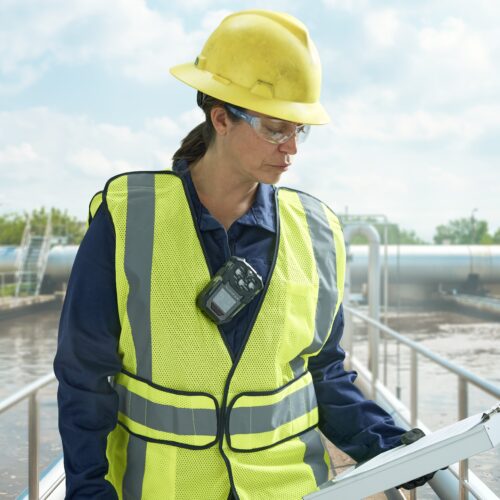
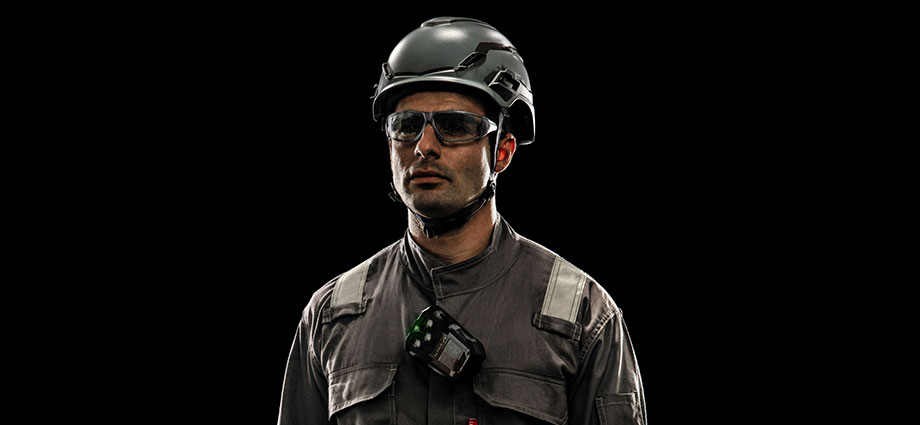
With devices that come with out-of-the box connectivity that enables radio frequency identification or RFID-based tagging, the arduous and time-consuming check-in and check-out process is not only simplified, it’s sped up significantly. For example, the ALTAIR io™ 4 Gas Detection Wearable is equipped with MSA id to digitally assign a specific device to a specific worker.
Not only does this automatically create worker accountability for the device, but digital assignation helps prevent unnecessary loss and potential repurchase of instruments. Plus, it helps safety managers know with a reasonable degree of certainty which worker encountered unsafe conditions or dangerous gas readings.
That means safety teams can monitor individual worker behavior to identify those who may be at risk and in need of additional training and compliance support.
4. Data dissemination efficiency
As every safety manager knows, data is essential in helping identify and solve safety management challenges – especially those related to compliance.
Connected work programs help simplify what often is a cumbersome process. Connectivity enables efficient and accurate data capture, dissemination, and recordkeeping, allowing safety managers to identify risks within multiple workflows so they can take corrective actions. Plus, as new features are added and improvements are deployed, the system automatically improves itself over time.
Ready for a Connected Work Program?
For safety managers wanting to optimize compliance and efficiency who have yet to implement a connected solution (or for those who don’t have the right one), MSA has established MSA+, a comprehensive subscription program including hardware and software.
With MSA+, safety teams in any workplace have access to powerful cloud-based solutions enabling faster implementation, increased warranty coverage, and automatic software and firmware upgrades – with minimal upfront capital expense.
The ALTAIR io™ 4 Gas Detection Wearable is the first connected product available under MSA+. Learn more about MSA+ and how it can help you take your safety program and outcomes to the next level.
References
1 https://www.marketsandmarkets.com/Market-Reports/cloud-computing-market-234.html
2 Gartner Digital Markets – Global Software Trends for 2021: A New and Normal Future

Recommended for You