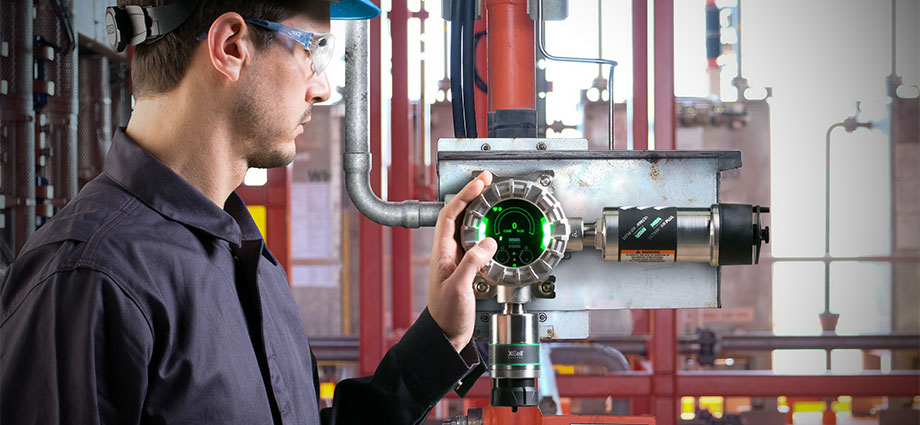
In high-risk industrial environments, gas leaks can pose significant safety hazards. Traditional gas detectors rely on gas accumulation to trigger alarms, but what if you could detect a leak the moment it starts—before the gas spreads? This is where ultrasonic gas leak detection (UGLD) technology comes into play.
How Ultrasonic Gas Leak Detectors Work
Unlike conventional gas detectors that require gas to reach a sensor, ultrasonic (acoustic) gas leak detectors listen for the unique high-frequency sound produced by pressurized gas leaks. This makes them particularly effective in open or ventilated areas where gas may dissipate quickly, making traditional detection methods less reliable.
When and Why to Choose Ultrasonic Gas Leak Detectors
Ultrasonic gas leak detectors are ideal for situations where traditional gas detection methods might fall short. Below are the key scenarios and reasons why UGLDs are the preferred choice:
1. Open or Ventilated Environments
Traditional gas detectors rely on gas accumulation around a sensor, but in open-air facilities, offshore platforms, or areas with strong ventilation, gas can quickly disperse before triggering an alarm.
Acoustic gas detectors sense leaks by listening for the sound of escaping pressurized gas, facilitating faster response times even in high-wind conditions.
2. High-Pressure Gas Systems
The higher the pressure, the louder the ultrasonic sound produced by a leak.
UGLDs are especially effective for pressurized gas systems (above 2 BAR/29 psi), such as pipelines, refineries, and processing plants, where even small leaks can create hazards. Want to see how ultrasonic detection performs in real-world conditions? Use our Ultrasonic Simulator to evaluate detection coverage and background noise levels for optimal protection.
3. Immediate Detection Needs
Conventional gas detectors may take time to detect leaks, as gas needs to reach a certain concentration near the sensor.
UGLDs provide rapid detection, reducing response time and minimizing the risk of explosion or hazardous exposure.
4. Areas with Flammable or Toxic Gases
In facilities handling methane, hydrogen, ammonia, or other hazardous gases, early detection is critical for preventing incidents.
UGLDs help mitigate risks by detecting leaks before gas can accumulate to dangerous levels.
5. Hydrogen Detection Advantages
Hydrogen is highly diffusive, meaning it disperses rapidly and may not accumulate near traditional gas sensors. UGLDs detect leaks by recognizing the sound of escaping gas, ensuring rapid response.
Unlike infrared (IR) detectors, which rely on gas absorption, hydrogen does not absorb IR effectively, making UGLDs a more reliable alternative.
Hydrogen is often stored under high pressure, making UGLDs particularly effective in fueling stations, industrial facilities, and processing plants.
Because hydrogen is light and rises quickly, leaks may not settle near point gas detectors. UGLDs work even in high-wind or ventilated areas where traditional methods may struggle.
6. Complementing Conventional Gas Detection Systems
While point gas detectors and infrared sensors are effective in confined spaces, UGLDs serve as an extra layer of protection in environments where gas movement is unpredictable.
Combining UGLDs with other gas detection technologies provides a comprehensive safety solution.
7. Reduced Maintenance and Operational Costs
Traditional sensors require periodic calibration and can be affected by environmental contaminants.
The Observer® i features Senssonic™ self-test technology, ensuring continuous performance without frequent maintenance.
The Observer-i: Advanced Technology for Reliable Detection
MSA’s Observer-i Ultrasonic Gas Leak Detector represents the next generation of UGLD technology, designed to improve safety and efficiency in industrial settings. Here’s what makes it stand out:
- Instantaneous Gas Leak Detection – Detects leaks from gas pressures as low as 2 BAR (29 psi), ensuring quick response even for small leaks.
- Artificial Neural Network (ANN) Technology – Reduces false alarms by distinguishing between real gas leaks and background noise.
- 360° Acoustic Coverage – Monitors an area up to 28 meters in radius, reducing the number of detectors needed.
- No-hassle Installation – Does not require in-field training, fully operational after installation.
- Senssonic™ Self-Test Function – Continuously monitors sensor integrity, eliminating the need for manual field testing.
Ensuring Compliance and Safety
MSA designs its gas detection solutions to meet industry safety standards. The Observer i carries a wide range of global approvals and certifications and meets SIL 3 requirements, making it suitable for use in high-integrity safety systems. While site-specific hazard assessments are recommended for optimal placement, ultrasonic gas detection offers an additional layer of protection in critical applications such as oil and gas facilities, chemical plants, and processing industries.
Conclusion
The Observer-i Ultrasonic Gas Leak Detector offers a proven solution for detecting pressurized gas leaks faster than conventional methods. As a pioneer in ultrasonic gas leak detection, MSA combines precision acoustic sensing with intelligent signal processing to help detect leaks quickly, reduce risk, and maintain safe, continuous operations.
Recommended for You