As the demand for environmentally friendly refrigeration solutions grows, many sectors are moving toward natural refrigerants with a Global Warming Potential (GWP) no greater than 150.1 Carbon dioxide (also denoted as CO2 or R-744) has emerged as a leading candidate due to its low GWP and zero ozone depletion potential. It is being used in design of new equipment to align with sustainability goals and regulatory requirements, such as the U.S. EPA Clean Air Act Section 608 and California Air Resources Board (CARB) regulations, which aim to reduce high-GWP refrigerant use.
The choice between a CO2 point detector and a low-level automatic leak detection (ALD) system can have a profound impact on factors like cost, maintenance requirements, safety requirements, and system complexity. ALD systems utilize proven gas sensing technologies to deliver fast and reliable alerts for small leaks down to 10 parts per million (ppm). Low level detection is particularly important when choosing CO2 for refrigeration. Since CO2 systems are high pressure, they release their charge quickly when there is a leak. Lower-level leak detection can help catch leaks earlier and avoid full discharge.
Environmental Benefits of CO2
Natural refrigerants like CO2, ammonia, and hydrocarbons can be favored as refrigerants of choice when it comes to minimizing environmental impact. With zero ozone depletion potential (ODP) and very low to zero GWP, natural refrigerants are seen as a great alternative to synthetic refrigerants as they are less polluting to our atmosphere. For food retailers and manufacturers, adopting CO2 refrigeration systems may align with sustainability goals and resonate with consumers who value eco-friendly practices.
Challenges of CO2 Refrigerant Detection Systems
1) Supply and Cost: As HFCs are phasing down under international agreements like the Kigali Amendment to the Montreal Protocol, the demand for natural refrigerants such as CO2 is increasing. This shift is driven by the implementation of environmental regulations and subsequently higher costs of synthetic refrigerants.
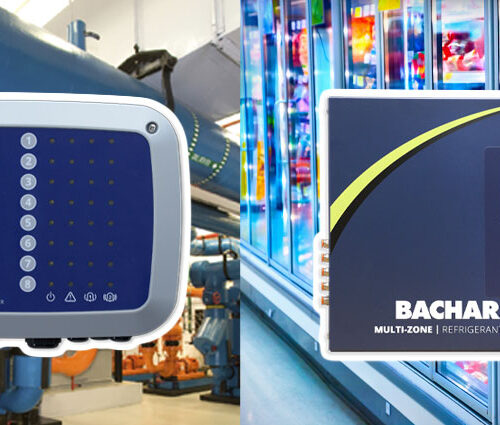
While CO2 as a processed gas is generally more affordable than synthetic refrigerants—ranging from $2 to $4 per pound compared to $20 to $100 per pound for HFCs—its price has been subject to upward pressure due to factors such as supply chain disruptions and increased demand from the beverage industry.2 As those prices continue to rise, safeguarding the refrigeration operation and its profitability becomes increasingly important. Implementing an ALD system like the MSA Bacharach® Multi-Zone that actively draws samples for leaks offers a proactive solution to minimize costly losses.
There are also challenges in CO2 storage cylinder availability. The growing demand has led to shortages and logistical challenges, causing an increase in price for the cylinders. With ALD solutions, you can help address that challenge.
2) High System Pressures: CO2 Refrigeration systems operate at significantly higher pressures compared to traditional refrigerant systems. Elevated pressures demand careful attention to component selection, safety protocols, and operational procedures to confirm system integrity and efficiency. High pressure systems also necessitate larger and more robust components, which can lead to increased overall size and cost of a system.3
Unlike some high-technology refrigeration system designs, ALD systems are straightforward to maintain. Sampling points are installed at strategic locations to provide real-time data and automatically detect and alert for leaks. The centralized sensing bench of a refrigerant monitor has a long lifespan and will continue to sense at high accuracy with annual calibration and a visual inspection.
3) Health and Safety: CO2 is an increasingly attractive option for use as a refrigerant for multiple reasons. However, CO2 can pose a significant potential health hazard to humans when exposed in high concentrations over time.
CO2 concentrations play an important function in the Occupational Safety and Health Administration (OSHA) exposure limits if there were to be a leak event. Typical figures stipulated for CO2 exposure by OSHA are:
- 5,000 ppm – Permissible Exposure Limit (PEL) for 8-hour exposure
- 40,000 ppm – Immediately Dangerous to Life or Health (IDLH)4
Since CO2 is part of the air we breathe (around 0.04% or 400 parts per million), it can be challenging to measure leaking CO2 refrigerant in low concentrations, due to its natural background level. When measuring for background CO2 in parts per million in a retail supermarket, for example, the levels can vary based on how many customers are around the sample point. It also can vary depending on if dry ice is being used in the area, as that too could add to the overall concentration of CO2.
Since CO2 systems operate at much higher pressures than systems used with many other types of refrigerants, such as HFC DX systems, when a CO2 refrigerant leak occurs, it tends to fill the space rapidly. The higher pressure also means that the amount of refrigerant lost is higher and can cause disruption to trade, stock losses, and health risks.
Automatic Leak Detection Technology
CO2 refrigerant leak detection systems typically use one of two methods: aspirated sampling or point sensing. Aspirated systems draw air from various sample points located up to 1,200 feet away—equivalent to the length of four football fields—making them ideal for monitoring large or complex areas. In contrast, point sensing systems detect gas in an enclosed space through natural diffusion at specific locations.
Regardless of the chosen method, non-dispersive infrared (NDIR) technology is the industry standard for detecting CO2. The decision between aspirated systems and point sensing systems ultimately depends on the goals of the business. Both systems are effective in detection for personnel safety. However, aspirated systems generally provide superior performance and deliver long-term value over the lifecycle of the equipment due to their ability to draw active samples and detect at lower levels, thereby preventing losses from smaller leaks.
CO2 users must install leak detection for health and safety reasons, to protect operations and personnel, especially in confined spaces, i.e. walk-in coolers / freezers and confined rack rooms from exposure to high CO2 . Regardless of the CO2 sensing technology, alarming for CO2 tends to include additional signage and alarms/sirens to alert personnel, including inside the walk-in / cooler freezer, and outside the CO2 rack rooms.
Make CO2 Work Smarter with Advanced Leak Detection
As the shift toward sustainable refrigeration accelerates, CO2 has emerged as a leading natural refrigerant due to its low environmental impact and regulatory alignment. However, its use introduces new challenges, including high operating pressures, potential health hazards, and rising costs. Advanced automatic leak detection (ALD) systems can play a vital role in mitigating these risks while promoting safety and efficiency. ALD technologies not only enhance operational reliability but also protect personnel and assets by providing rapid, precise leak alerts—even at very low concentrations. In this evolving landscape, investing in robust CO2 detection solutions is not just a compliance measure but a proactive step toward safer, greener refrigeration systems.
Sources
- Technology Transitions HFC Restrictions by Sector – https://www.epa.gov/climate-hfcs-reduction/technology-transitions-hfc-restrictions-sector
- Liquid Carbon Dioxide Price Trends and Forecast –https://www.chemanalyst.com/Pricing-data/liquid-carbon-dioxide-1090?
- Why CO2 is Not Widely Used as a Refrigerant: A Comprehensive Analysis – https://www.ourmechanicalcenter.com/archives/13072
- Carbon Dioxide Health Hazard Information Sheet – https://www.fsis.usda.gov/sites/default/files/media_file/2020-08/Carbon-Dioxide.pdf
Recommended for You