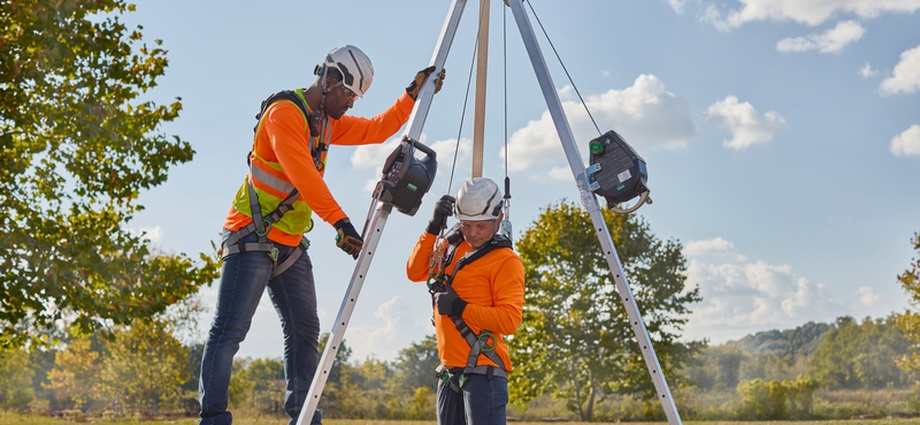
Confined space entry is often complex and hazardous. Workers may be exposed to dangerous concentrations of gases including oxygen (whether too much or too little), carbon monoxide, hydrogen sulfide, and other toxic or combustible substances such as methane and propane. In some environments, additional hazards such as carbon dioxide, chlorine, or ammonia may also be present depending on the application and surrounding processes. With an estimated 2.1 million workers entering permit-required confined spaces each year,* it is critical for teams to have the right safety solutions in place – especially a properly configured mix of connected gas detectors – to help identify and respond to these risks.
One way to think about a comprehensive gas detection setup for confined spaces is to break it down into three key parts: 1) pre-entry sampling, 2) continuous worker monitoring, and 3) real-time data and visibility.
1. Pre-Entry Confined Space Sampling
Before workers enter a confined space, one of the critical first steps is testing the atmosphere. This helps establish baseline conditions and spot any potential hazards early on. For this step, multigas detectors – such as the ALTAIR io™ 6 Multigas Detector with up to 6-gas capability and an integrated pump, are a proper fit.
Devices like the ALTAIR io 6 function in a gas detection fleet as a tool used to sample the air of the confined space before any workers enter. Since this type of work can often require tough conditions and exposure to the elements, it is important to choose equipment that can handle the job. Features like durability, a clear and easy-to read display, and simple one-handed operation with a comfortable grip can help make this pre-entry step faster and more efficient.
2. Continuous Worker Monitoring
Conditions in confined spaces may change rapidly due to work activities, chemical reactions, or even environmental shifts. Keeping workers continuously monitored while they’re in a confined space helps keep them safe throughout the job. This is where wearable gas detectors in a fleet come into play. Wearable devices for each worker, such as the ALTAIR io™ 4 Gas Detection Wearable, track up to four gases, sound alarms when hazards are present, and share each worker’s location and status, helping safety managers keep a close, real-time eye on their team.
Both ALTAIR io 6 and ALTAIR io 4 devices have digital device assignment capabilities, allowing workers to check-in and have a detector assigned to them without infrastructure, manual processes, or clipboard sign-ins. Both devices also use MSA’s XCell® sensor platform, which continues to lead the industry in lifetime and durability.
3. Real-Time Data and Visibility
Connected solutions, including ALTAIR io 6 and ALTAIR io 4 devices along with MSA Grid cloud-based software, can help enable a proactive gas detection program for confined space applications. Connected solutions deliver device and worker insights that help make compliance simpler, improve visibility, and drive productivity. When pre-entry sampling tools and wearable monitors are all connected to the same software, your gas detection system can become more effective. This helps improve confined space safety with:
-
- Real-time alerts and location awareness
- Visibility of workers’ locations and their devices’ status
- Automated device compliance and incident reporting
- Digital device assignment pairing each worker with a specific detector
In confined environments where communication is already limited, these capabilities can help improve situational awareness, coordination, accountability, and oversight.
Some considerations for determining the appropriate mix of connected gas detection solutions for confined space applications may include:
- Aligning devices to workflow stages with sampling tools for pre-entry and wearables for continuous monitoring
- Standardizing on multigas capability to help identify a range of atmospheric threats
- Prioritizing connectivity to help enhance visibility and streamline compliance
- Evaluating device usability and durability, particularly for harsh environments
The goal is to build a cohesive system that supports workers before, during, and after confined space entry. A program with connected devices can help enhance worker safety, boost efficiency, and drive organizational productivity.
Explore MSA Connected Gas Detection solutions, including ALTAIR io 6 and ALTAIR io 4 devices and Grid software.
Recommended for You