• Skip to primary navigation
  • Skip to main content
  • Skip to footer
  • MARKETS & PRODUCTS
    • Markets


      Construction

      Cybersecurity

      Fixed Gas & Flame Detection

      General Industry

      Healthcare

      HVAC-R

      Oil & Gas

      Training

      Utilities

      Products


      Combustion Analysis

      Confined Space

      Connected Work

      Corporate

      Fall Protection

      Fixed Gas & Flame Detection

      Gas Analysis

      General

      Head Protection

      Heat Stress

      Leak Detection

      Portable Gas Detection

      Refrigerant Analysis

      Respiratory Protection

      Column
  • SUBSCRIBE

Understanding Terms Used in Confined Space Standards

2 Min Read | May 20, 2019

Reading Time: 2 minutesYou can’t apply what you don’t understand, so it’s important for all workers to understand the terminology found in relevant safety standards.

May 20, 2019 by Kimberly Smith

Reading Time: 2 minutes
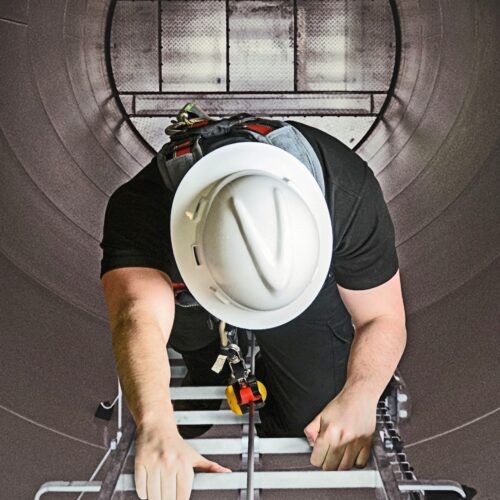
Confined Space Top Entry

While the ancient Greek philosopher Socrates didn’t have the benefit of modern technology, he definitely had the right idea: the beginning of wisdom, he said, is the definition of terms. And it’s still true—even in occupations that don’t require a philosophy degree!

It’s important for all workers to understand the terminology found in relevant safety standards, especially when they’re working in environments that may be particularly dangerous, like confined spaces. Why? Because you can’t apply what you don’t understand.

This isn’t always as simple as it sounds. Terms are often defined a bit differently depending on which standard, or subpart of a standard, you’re looking at. Furthermore, standards change on a regular basis. But—rather than ignoring variations or letting revisions frustrate you—find the time to periodically review and compare definitions in each standard. Doing so will deepen your understanding of confined space safety best practices.

Take, for example, the term hazardous atmosphere. The newly revised ANSI Z117.1 Standard broadly refers to the possible hazards as “oxygen deficiency or enrichment; flammability or explosivity by gas, vapor, dust; or toxicity.” OSHA 1926.1202, however, includes specifics for these general categories, e.g., ANSI’s “flammability… by gas [or] vapor” becomes OSHA’s “flammable gas, vapor or mist in excess of 10% LFL.” Here we have a concrete definition of a hazard that can be measured and monitored. In this case, OSHA 1926.1202—and its counterpart OSHA 1910.146 (b)—more precisely and actionably explain hazardous atmosphere.

Another expression more fully defined in the OSHA 1926 Standard is serious physical damage. ANSI Z117.1’s explanation of a similar phrase is not especially detailed: “Serious Hazards. Conditions which may cause death, temporary or permanent impairment, functional disorder or an inability to exit the space.” OSHA 1926 expands ANSI’s explanation to include “an impairment or illness in which a body part is made functionally useless… and includes loss of consciousness.” Such a condition “would usually require treatment by a physician or other licensed health-care professional.” It’s important to note that OSHA 1910.146 (b) does not define serious hazards at all; therefore, those seeking to categorize potential injuries at any worksite—in construction or general industry—will appreciate the specifics outlined in OSHA 1926.1202.

These are just two examples of comparing and contrasting definitions found in the three confined spaces standards.

Recommended for You

General Industry

Twelve Days of Safety: Navigating the Holidays with Joy and Caution

December 12, 2024
5 Min Read
Construction

OSHA’s Head Protection Safety and Health Information Bulletin: What It Means for PPE Selection

May 28, 2024
4 Min Read
Construction

Understanding the OSHA Proposed Rule on Heat Stress Prevention: “Heat Injury and Illness Prevention in Outdoor and Indoor Work Settings”

July 30, 2024
4 Min Read
Construction

Responding to Portable Gas Detector Alarms: Benefits of Connected Safety Solutions in Confined Space Applications

August 13, 2024
5 Min Read
Share:

Footer

MSA MISSION: That men and women may work in safety and that they, their families, and their communities may live in health throughout the world.

MSASafety.com

  • Construction
  • General Industry
  • Oil & Gas
  • HVAC-R
  • Utilities
  • Fixed Gas & Flame Detection
  • Fire Service
MSA on Facebook   MSA on X   MSA on Instagram   MSA on LinkedIn   MSA on YouTube  

Contact

  • blog@msasafety.com
  • 1-800-672-2222
  • View All Contact Info
  • Subscribe

Other MSA Blogs

  • Fire Service – The Scene
  • FieldServer – The Safety Connection

© 2024 MSA. All rights reserved.

© 2025 MSA . All rights reserved.

This website uses cookies to improve your experience. We'll assume you're ok with this, but you can opt-out if you wish. Accept Read More
Privacy & Cookies Policy

Privacy Overview

This website uses cookies to improve your experience while you navigate through the website. Out of these, the cookies that are categorized as necessary are stored on your browser as they are essential for the working of basic functionalities of the website. We also use third-party cookies that help us analyze and understand how you use this website. These cookies will be stored in your browser only with your consent. You also have the option to opt-out of these cookies. But opting out of some of these cookies may affect your browsing experience.
Necessary
Always Enabled
Necessary cookies are absolutely essential for the website to function properly. This category only includes cookies that ensures basic functionalities and security features of the website. These cookies do not store any personal information.
Functional
Functional cookies help to perform certain functionalities like sharing the content of the website on social media platforms, collect feedbacks, and other third-party features.
Performance
Performance cookies are used to understand and analyze the key performance indexes of the website which helps in delivering a better user experience for the visitors.
Analytics
Analytical cookies are used to understand how visitors interact with the website. These cookies help provide information on metrics the number of visitors, bounce rate, traffic source, etc.
Advertisement
Advertisement cookies are used to provide visitors with relevant ads and marketing campaigns. These cookies track visitors across websites and collect information to provide customized ads.
Others
Other uncategorized cookies are those that are being analyzed and have not been classified into a category as yet.
SAVE & ACCEPT